
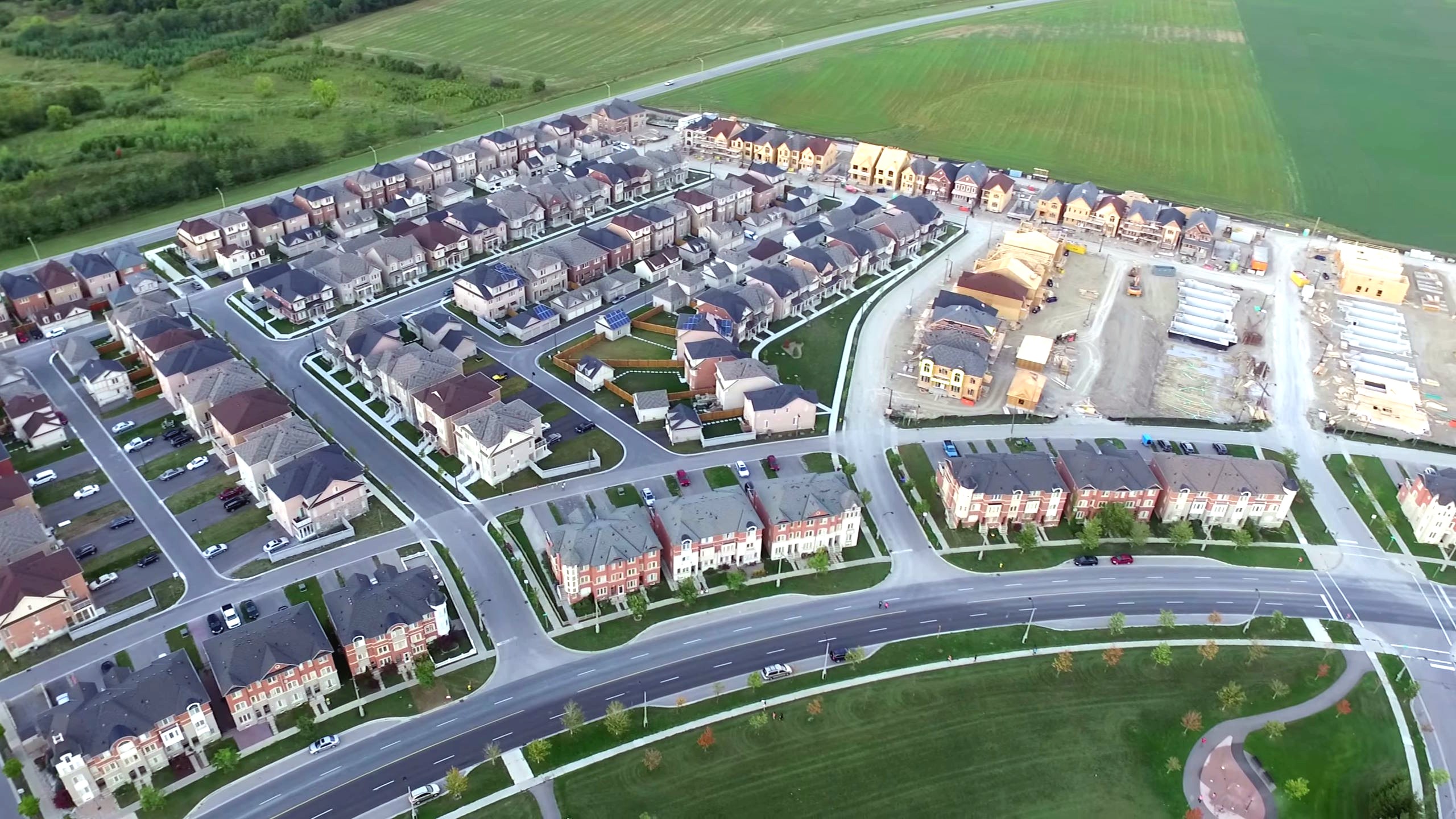
Cornell, Markham: Traditional New Urbanism
Designed by Miami-based Duany Plater-Zyberk & Associates, Cornell represents one of the most successful implementations of traditional New Urbanist principles in Canada. This community of 13,000 people demonstrates how expert-led design can create walkable neighborhoods with diverse housing while maintaining market appeal.
- Traditional grid pattern with comprehensive rear laneway system
- Housing diversity through mixed types on single blocks
- Successful community amenities and transit integration
- Coach houses and live-work units pioneering gentle density
- Market success proving New Urbanism's commercial viability
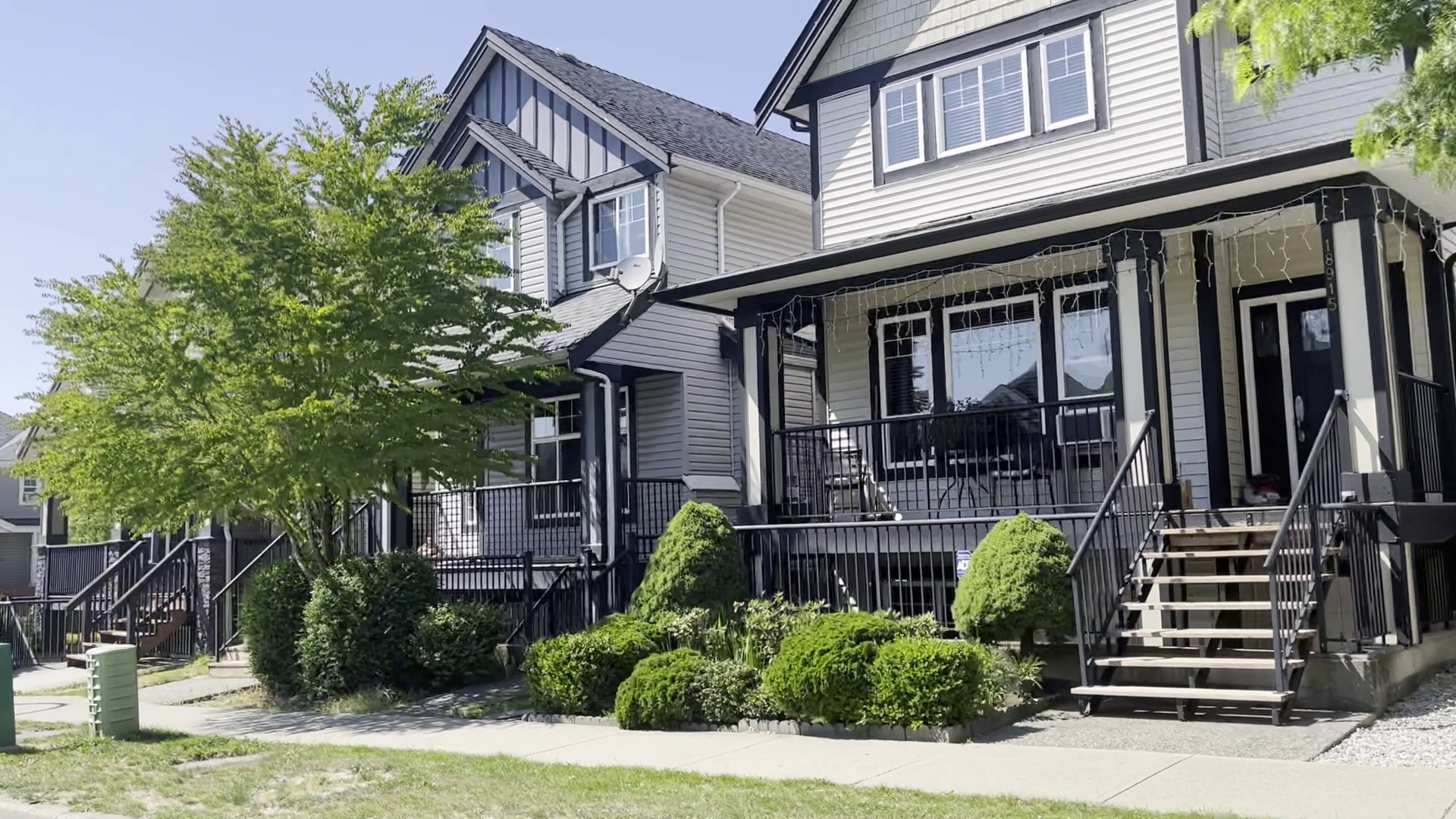
East Clayton, Surrey: Sustainable Innovation
Led by UBC's Patrick Condon, East Clayton pioneered sustainable community development through collaborative planning and environmental innovation. This neighbourhood of 15,000 residents demonstrates how policy innovation can create affordable housing while addressing ecological challenges through integrated design.
- Seven sustainability principles integrated into all design decisions
- Revolutionary secondary suites and coach houses for affordability
- Collaborative planning process engaging diverse stakeholders
- Narrow streets and natural drainage systems reducing environmental impact
- Live-work units creating innovative small business opportunities
Comparing Canada's New Urbanist Pioneers
Cornell (13,000 residents) and East Clayton (15,000 residents) represent two distinct paths to creating alternatives to conventional suburban development at a similar scale. Cornell achieved market success through design excellence and traditional New Urbanist principles, while East Clayton pioneered policy innovations and environmental sustainability. Understanding their different approaches—and outcomes—provides crucial lessons for future community development across Canada.
Tale of Two Approaches: Design vs. Innovation
Cornell's Design Excellence Approach
Cornell followed the traditional New Urbanist playbook perfected by Duany Plater-Zyberk & Associates. The emphasis was on implementing proven design principles through expert-led planning and careful attention to urban design details.
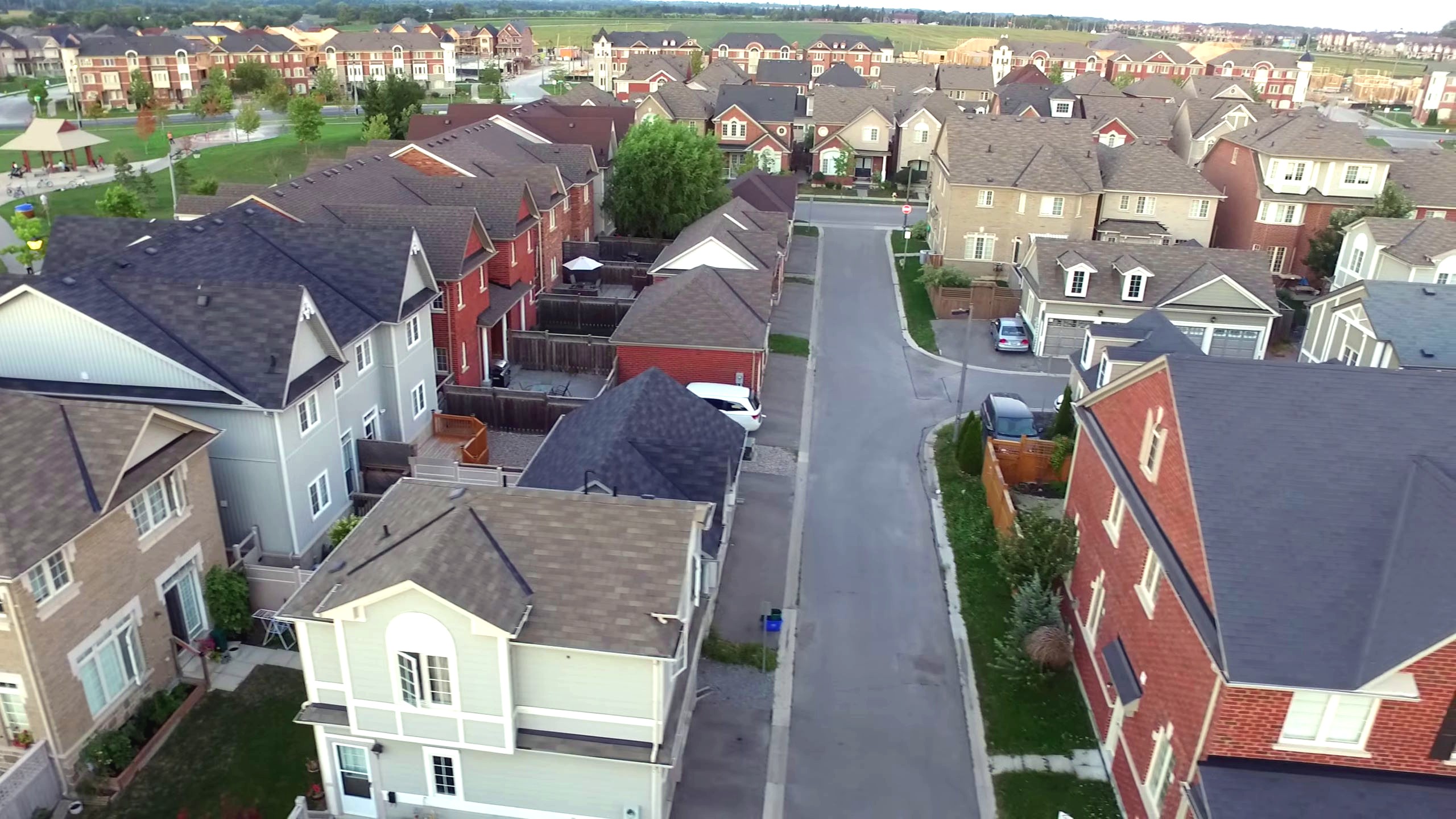
Cornell's signature rear laneway system separates cars from pedestrian streetscapes
Key Successes
- Design Coherence: Consistent architectural character and streetscape quality throughout
- Market Viability: Strong property values and continued demand prove commercial success
- Infrastructure Excellence: Well-planned community amenities and transit connections
- Housing Innovation Pioneer: First in Canada to successfully integrate coach houses and secondary suites in New Urbanist context
Ongoing Challenges
- Affordability: Market forces pushed toward higher-end development despite original intentions
- Mixed-Use Struggles: Commercial areas remain largely unsuccessful
- Behavior Change: Residents still drive for most activities despite walkable design
East Clayton's Innovation Approach
East Clayton prioritized policy innovation and environmental sustainability through collaborative planning led by UBC researchers. The focus was on solving complex challenges through community engagement and experimental solutions.
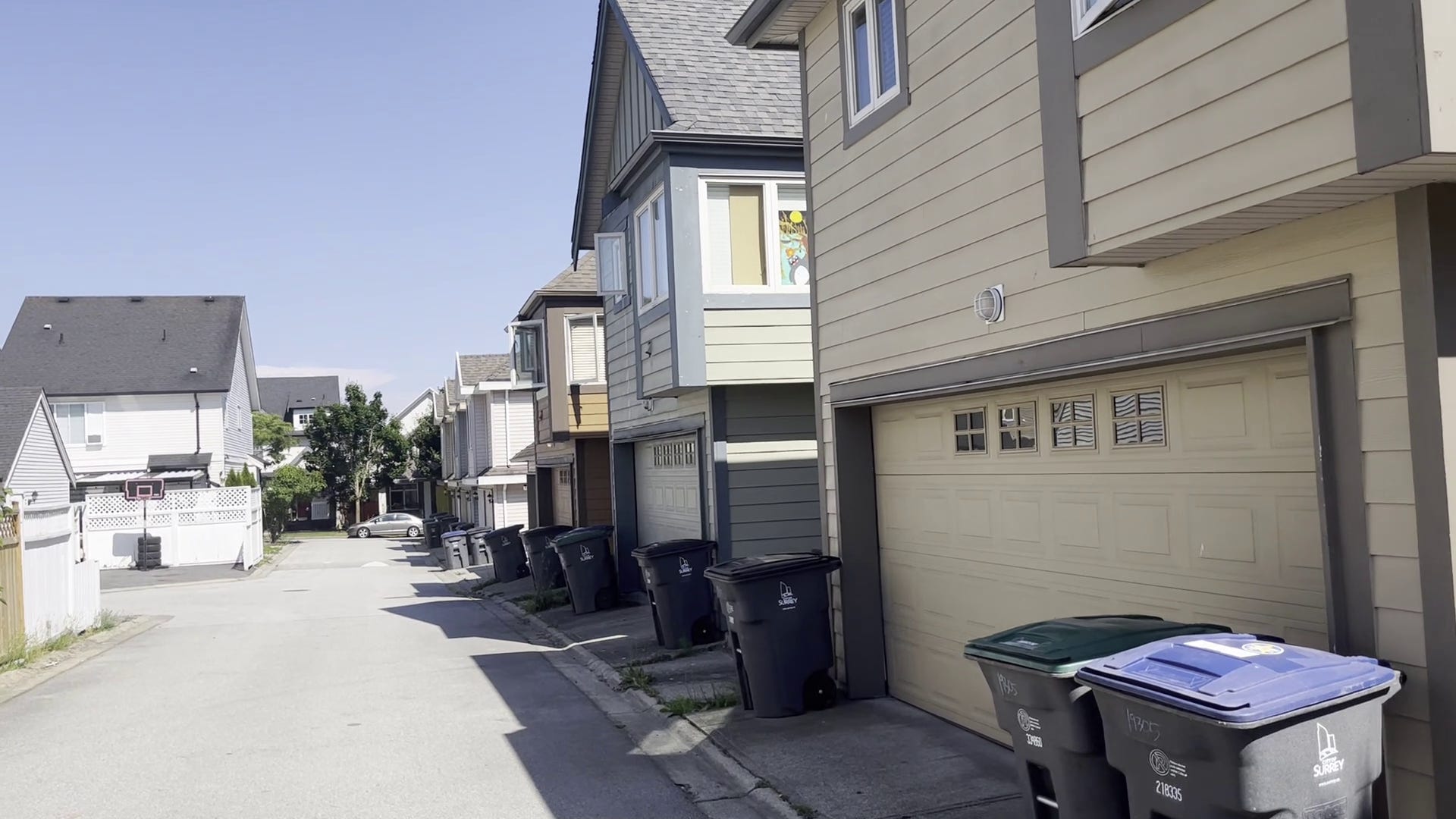
East Clayton's coach houses provide affordable rental housing while increasing density
Key Successes
- Housing Innovations: Legal secondary suites and coach houses which influenced policy across BC and beyond
- Environmental Leadership: Integrated stormwater management and sustainable infrastructure
- Collaborative Process: Demonstrated effective community engagement in planning
- Affordability Achievement: Successfully implemented housing model to maximize affordability through rental income
Ongoing Challenges
- Parking Crisis: Narrow streets and increased density created serious parking shortages
- Implementation Gaps: Market forces compromised original mixed-use vision
- Growth Management: Rapid development outpaced school and service capacity
Street Design Philosophy
Cornell: Formal Grid + Laneways
Traditional grid pattern with some four-lane arterials and comprehensive rear laneway system. Required significant adaptation to Canadian conditions (snow removal, fire access).
East Clayton: Narrow "Queuing Streets"
Environmentally-focused design with tree-lined narrow streets allowing two-way traffic but encouraging slower speeds. Integrated natural drainage systems.
Housing Innovation
Cornell: Market-Responsive Diversity
Impressive variety of housing forms including single-family detached, semi-detached/duplexes, townhouses running along street frontages, and innovative coach houses both detached and attached to their "parent" buildings. Multiple shapes, sizes, and configurations within single blocks. Current prices $637K-$1.3M+.
East Clayton: Focused Affordability Model
Primarily townhouse complexes and narrow single-family homes, most with basement suites and many with laneway coach houses. More uniform housing typology focused on maximizing affordability through rental income.
Mixed-Use Reality
Cornell: Struggling Town Center
Planned "Cornell Centre" remains largely undeveloped. Some success with fine-grained mixed-use along residential streets.
East Clayton: Auto-Oriented Compromise
Original pedestrian-friendly commercial vision converted to conventional strip malls. Live-work areas became standard retail.
Long-Term Outcomes: What We've Learned
Cornell's Legacy: Proven Viability
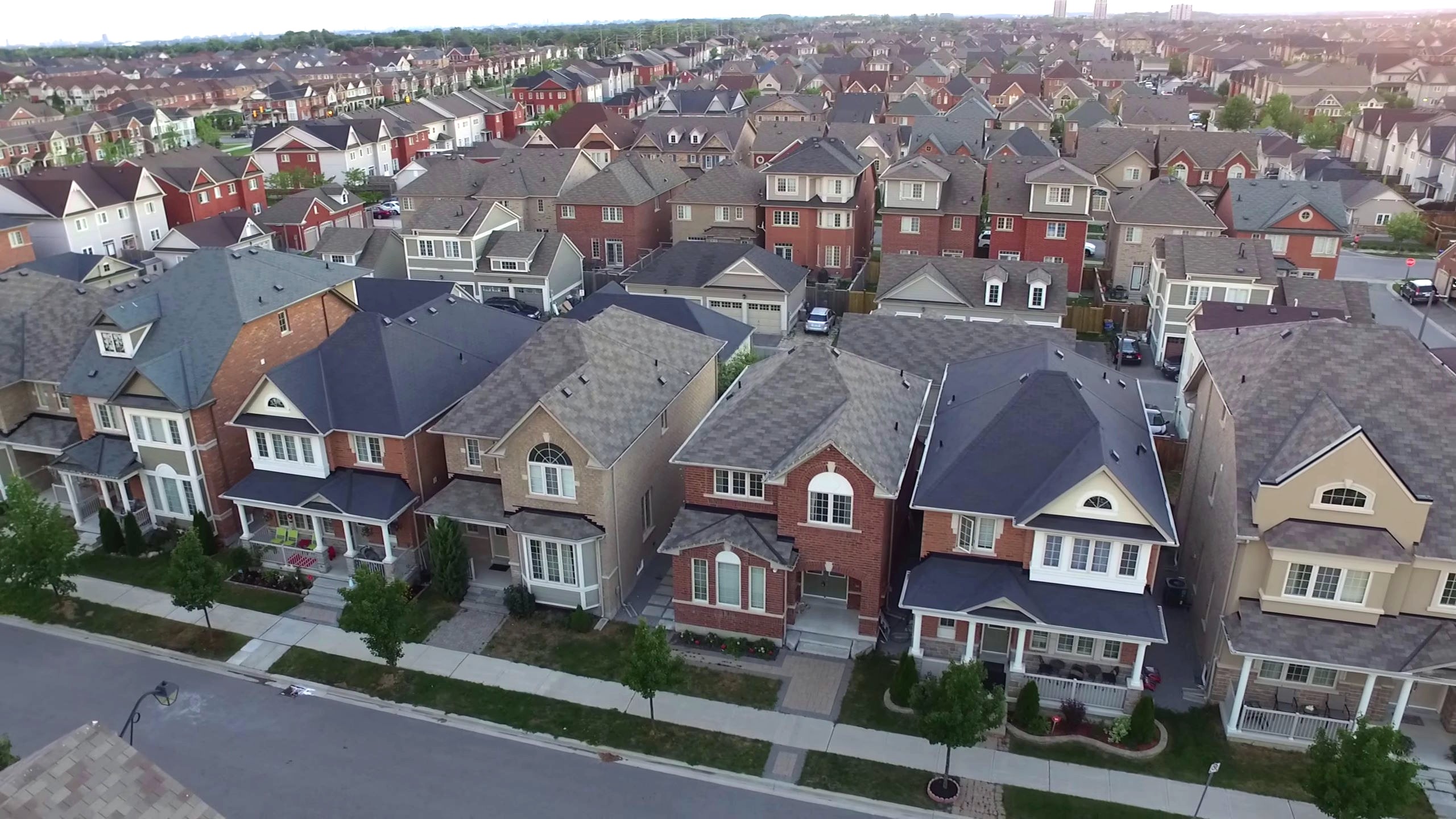
Cornell demonstrates that New Urbanist design can be commercially successful in Canadian markets
After 25+ years, Cornell has proven that New Urbanist communities can succeed commercially while providing superior urban design quality. The development influences subsequent Markham projects and demonstrates market appetite for walkable neighborhoods.
- Strong property values and continued demand
- Successful community amenities serving residents well
- Transit integration setting standard for future development
- Design excellence that residents appreciate even if they don't change behavior
East Clayton's Legacy: Policy Innovation
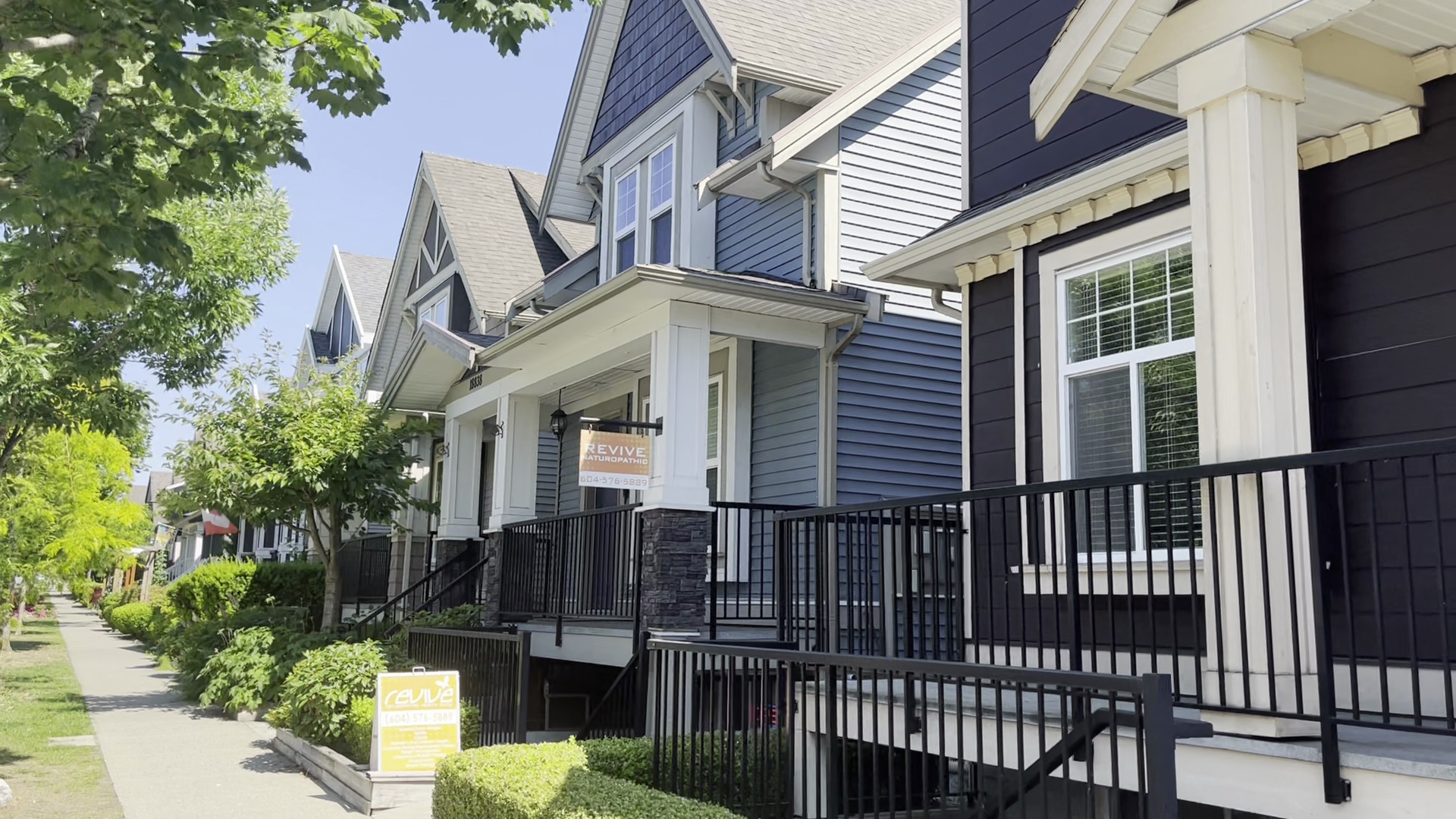
East Clayton's live-work innovations influenced policy across North America
East Clayton's innovations in secondary suites, coach houses, and sustainable infrastructure have been studied and adapted by municipalities across North America, demonstrating the power of policy innovation to enable more sustainable development patterns.
- Policy innovations adopted widely across BC and beyond
- Demonstrated viability of environmental sustainability in suburban context
- Collaborative planning process becoming model for community engagement
- Housing innovations helping address affordability challenges regionally
Lessons for Langley: Combining the Best of Both Approaches
The experiences of Cornell and East Clayton offer complementary lessons for creating successful alternative development in Langley:
Adopt Cornell's Implementation Excellence
- Design Coherence: Maintain consistent vision throughout development phases
- Infrastructure Planning: Ensure adequate community amenities and services from the start
- Market Responsiveness: Balance innovation with proven market appeal
- Transit Integration: Plan development around existing and future transit corridors
- Realistic Parking: Provide adequate parking while encouraging alternative transportation
Embrace East Clayton's Policy Innovation
- Housing Diversity: Enable secondary suites and coach houses for affordability
- Environmental Integration: Design infrastructure to work with natural systems
- Collaborative Process: Engage community in meaningful planning participation
- Regulatory Flexibility: Create zoning that enables rather than restricts innovation
- Live-Work Integration: Support small businesses through mixed-use policies
Key Insight for Langley
The most successful New Urbanist development would combine Cornell's design excellence and implementation success with East Clayton's policy innovation and environmental integration. Both communities prove that alternatives to conventional suburban development are commercially viable and market-acceptable, providing confidence for pursuing similar approaches in Langley while learning from their challenges with mixed-use development and behavior change.
Current Evolution and Future Directions
Both communities continue evolving their original visions to address contemporary planning priorities:
Cornell's Transit-Oriented Future
- Cornell Terminal (2022) providing 40-minute access to downtown Toronto
- 2024-2025 Secondary Plan update focusing on transit-oriented development
- Intensification around transit while maintaining neighborhood character
- Strong demand from young families keeping development active
East Clayton's Continued Growth Management
- Clayton Corridor Plan addressing SkyTrain integration with two Transit-Oriented Areas
- Ongoing efforts to manage parking and school capacity challenges
- West Clayton development adding 1,000+ units with updated planning approaches
- Clayton Community Centre achieving Passive House certification
Both developments demonstrate that successful New Urbanist communities require ongoing adaptation and management, not just initial visionary planning. Their continued evolution provides valuable insights for long-term community stewardship and place-making.
About Our Case Studies
These case studies were researched and compiled by Langley Urbanist Society Director and Strong Towns Langley leader, Jаmеs Hаnsеn, to identify successful implementations of people-first urban design principles that could inform development in our region.
Have a suggestion for a case study we should explore? Know of an interesting example of sustainable, financially resilient urban development?
Contact James directly at james@strongtownslangley.org, find him on our discord, or contact us with your ideas.

Jаmеs Hаnsеn