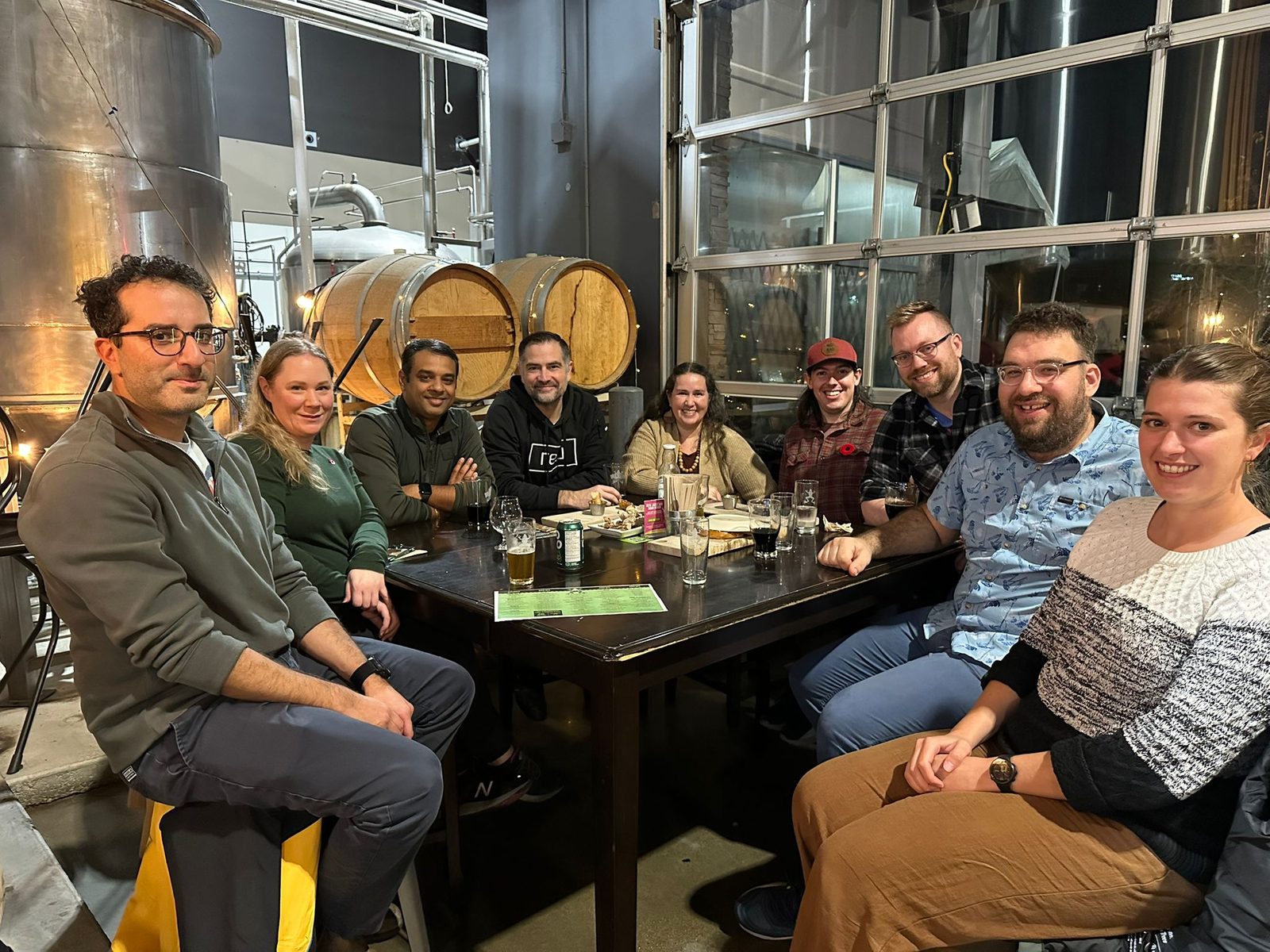
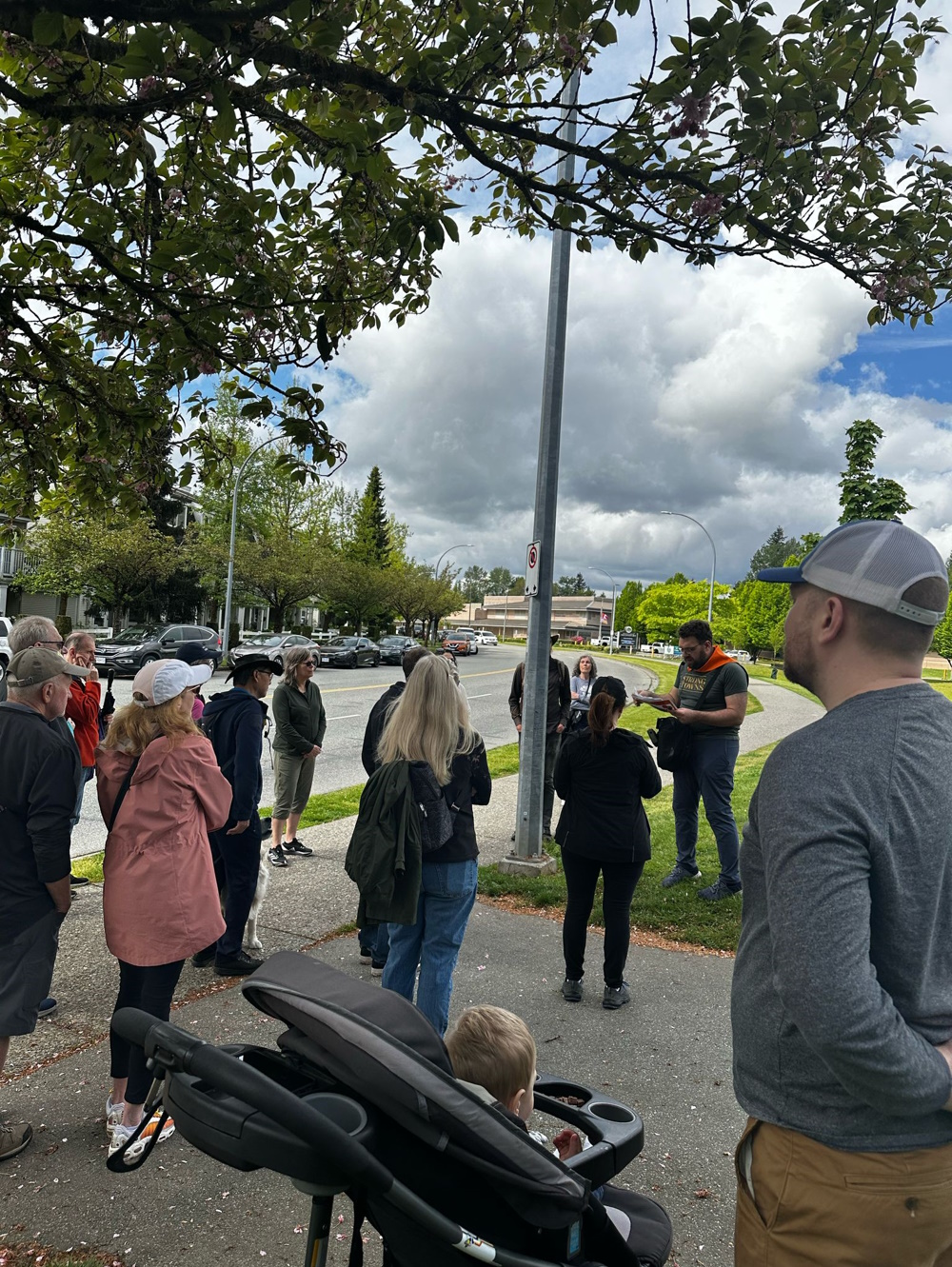
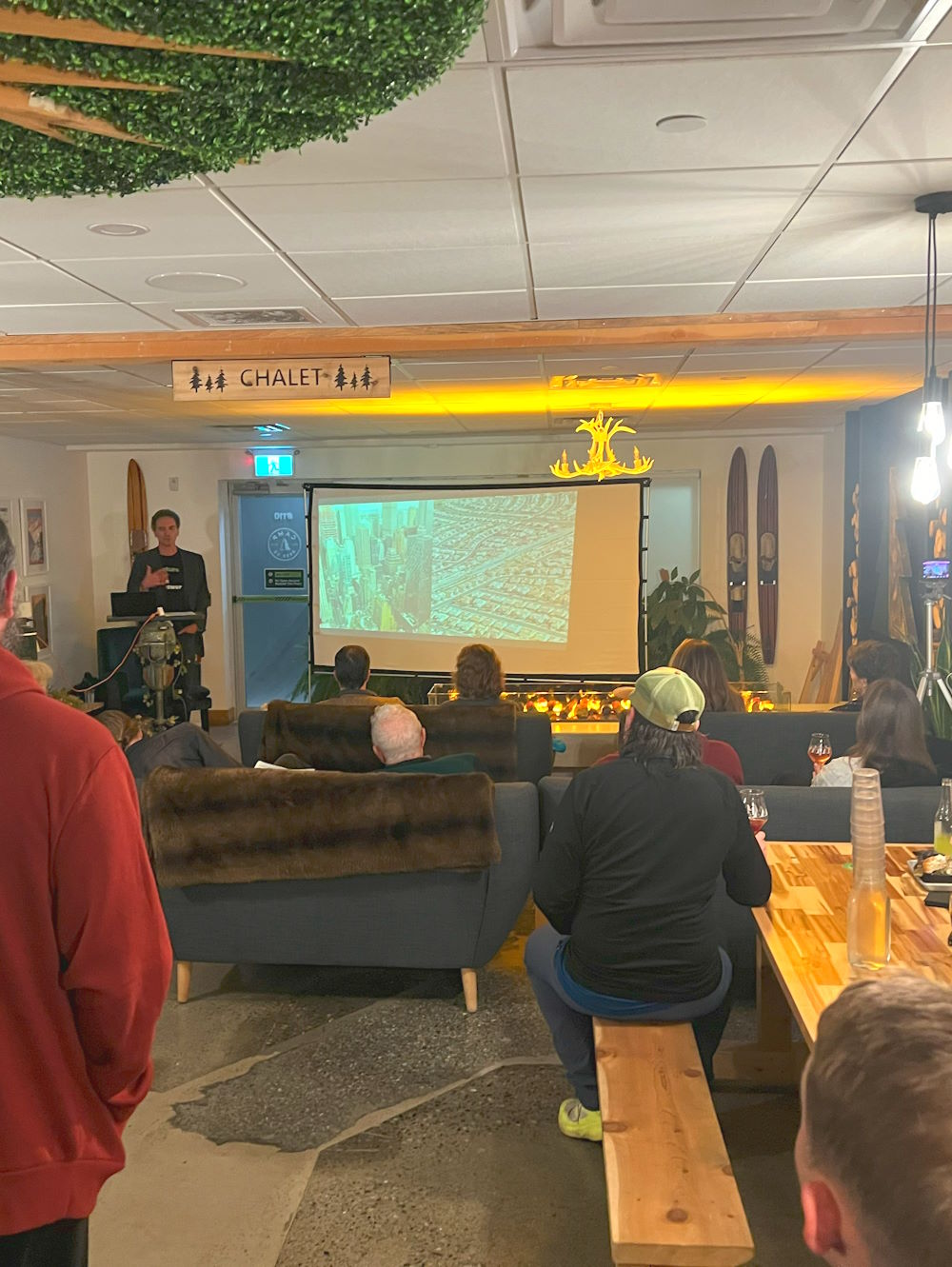


12 amendments, 12 passed. Now adopt the strategy.
The Transportation and Mobility Strategy will guide how the Township builds its streets for the next 25 years, replacing a 2009 plan that staff describe as largely automobile-focused. In March 2026 Council passed all 12 of Councillor Michael Pratt's amendments, built from feedback by us and HUB Cycling Langley, and the strategy comes to the new Council on November 16.
The Township expects to grow from just over 150,000 people today to about 350,000 by 2050, and until now it has been planning its streets with a transportation plan from 2009.
The new strategy has 20 strategies and 72 actions across 6 themes, from safety and transit to walking, cycling and goods movement, and it says plainly that the Township can't widen its way out of congestion.
…continuing to expand driving infrastructure across the network would deliver diminishing returns and is constrained by limited right-of-way, cost, and community impacts.
It also narrows driving lanes in the standard road cross sections to make room for walking and cycling, written straight into the Subdivision and Development Servicing Bylaw (Action S2.1), and it covers slip lane removal (Action S3.2), which our 88 Avenue slip lanes campaign has been waiting on.
When the draft came out on February 20, 2026, Council voted 5 to 4 to hold it for two weeks so people could weigh in. Volunteers from HUB Cycling Langley, led by Bаrry Azеvedo with Louisе Smіth, put together their list of issues, and we read all 250 pages and sent Councillor Michael Pratt our analysis with 8 requested changes.
Its greatest risk is not that it aims in the wrong direction, but that it provides itself too many off-ramps before arriving at implementation.
On March 9 Councillor Pratt brought 12 amendments and every one passed, and the amended draft went out for public feedback without a single vote against it. In the minutes below, the highlighted italic text is what Council added and the crossed-out text is what it took out.
 From us and HUB
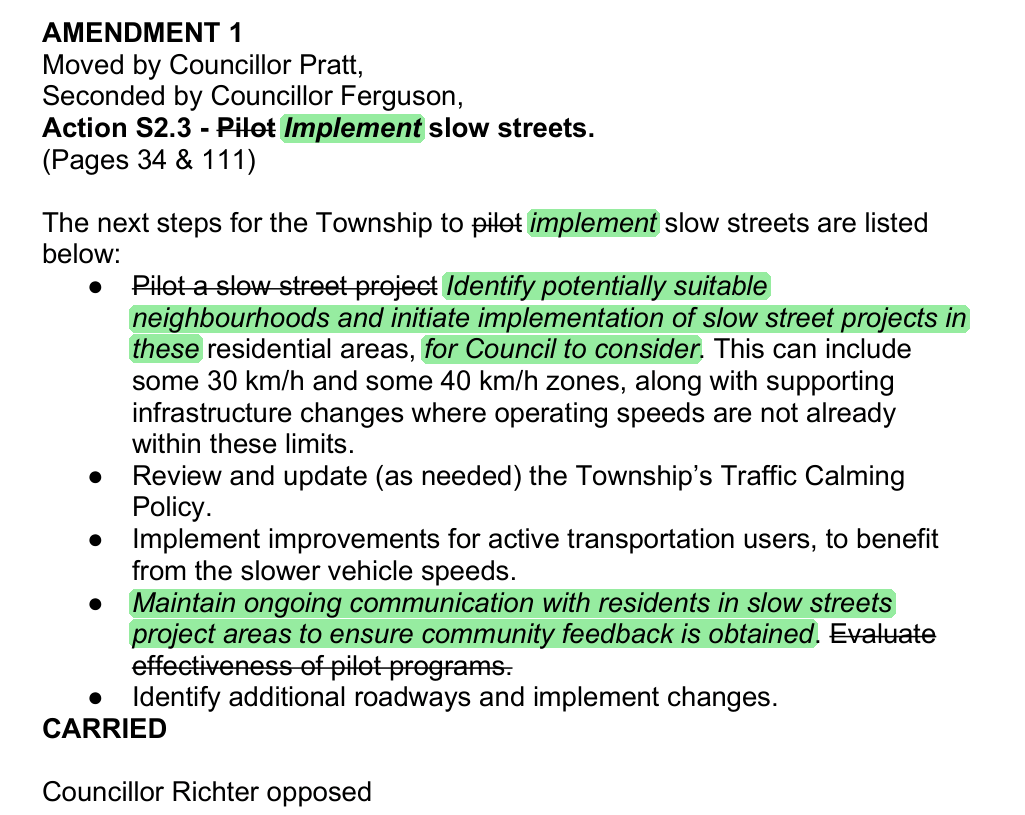
Slow streets get built, not just piloted
Council swapped "pilot" for "implement", so the Township now picks neighbourhoods and starts 30 and 40 km/h slow street projects, with changes to the street where drivers are going faster than that.
 From us and HUB
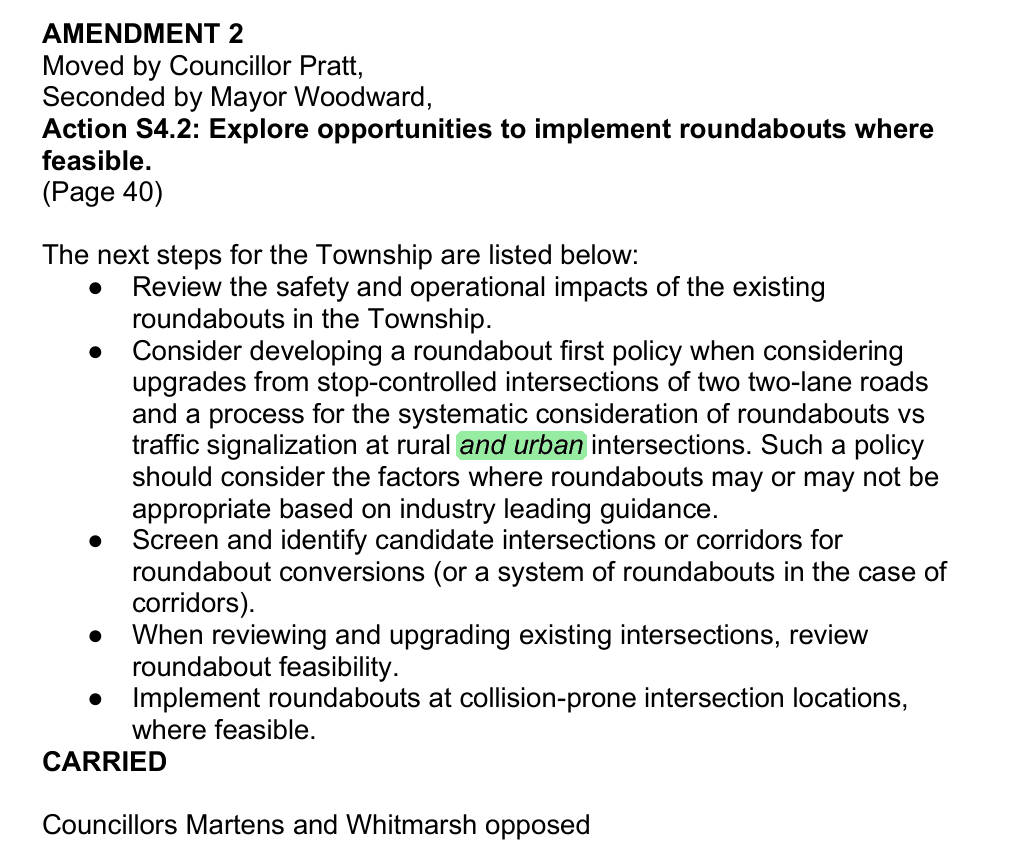
Roundabouts in town, not just the country
Adding "and urban" puts a roundabout-first policy on the table for town intersections too, and roundabouts are safer and can move about 50% more traffic than a signal, which takes pressure off widening roads.
 From our analysis
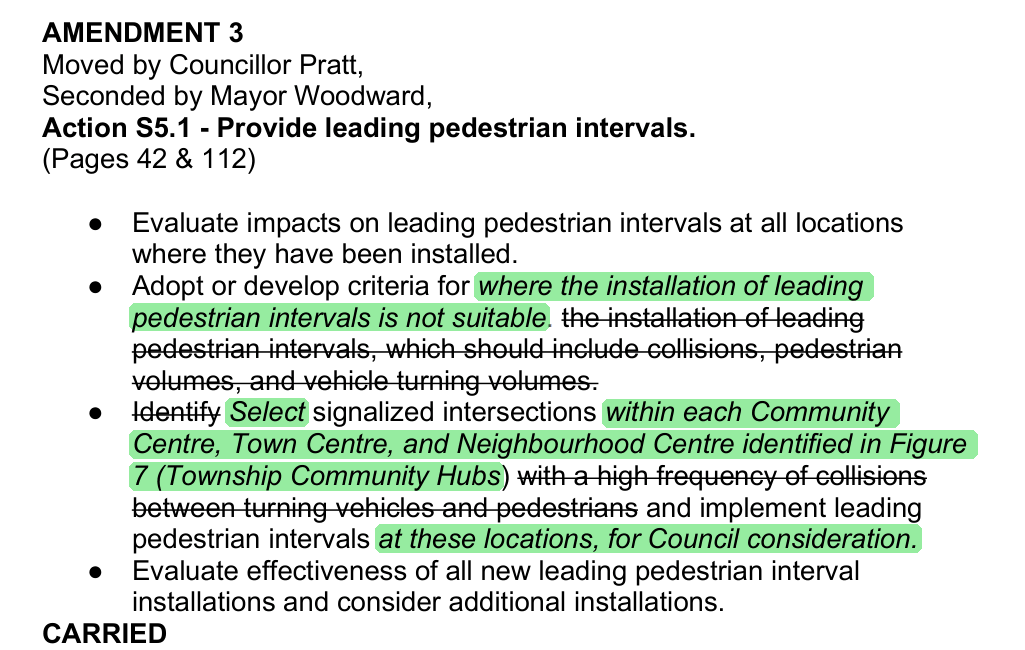
Walk first, by default
Instead of criteria for where to add leading pedestrian intervals, staff now set criteria for where they don't fit, and add them at selected signals in every community hub.
 From our analysis
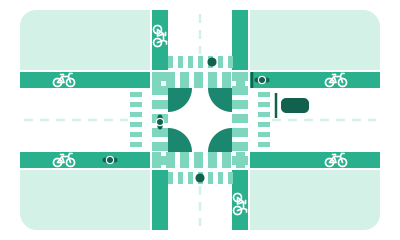
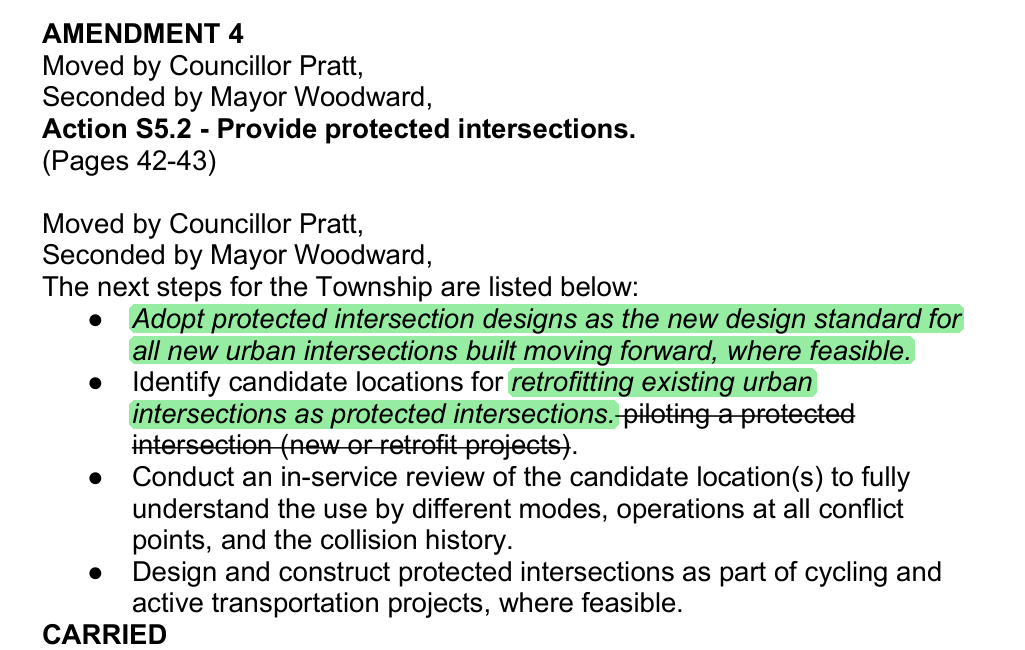
Protected intersections on bike routes
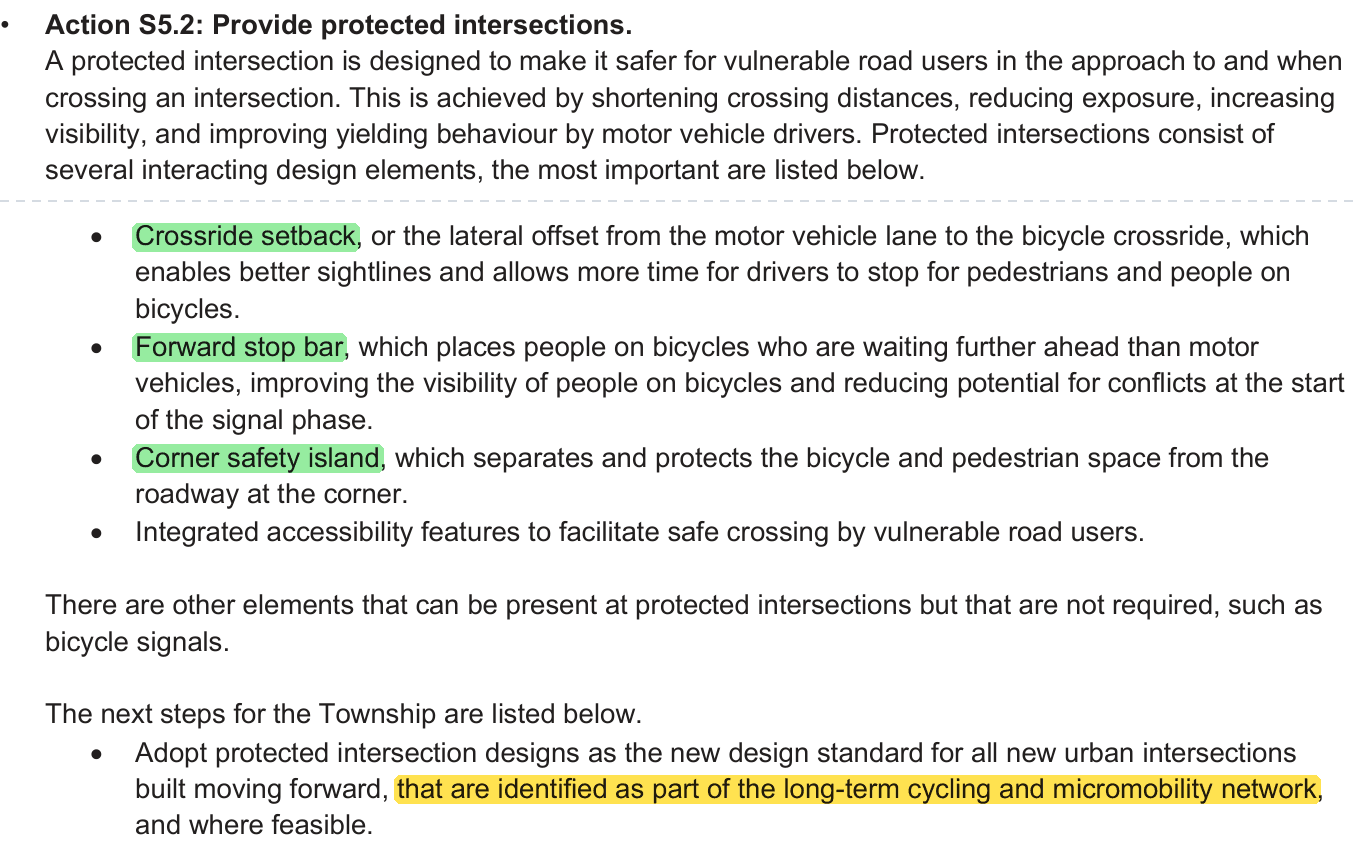
New urban intersections on the long-term cycling network are to be built as protected intersections where feasible, with corner islands that set the bike and walking crossings back from turning cars. Council's amendment said all new urban intersections, and the final strategy (lower clipping) limits it to the cycling network.
 From us and HUB
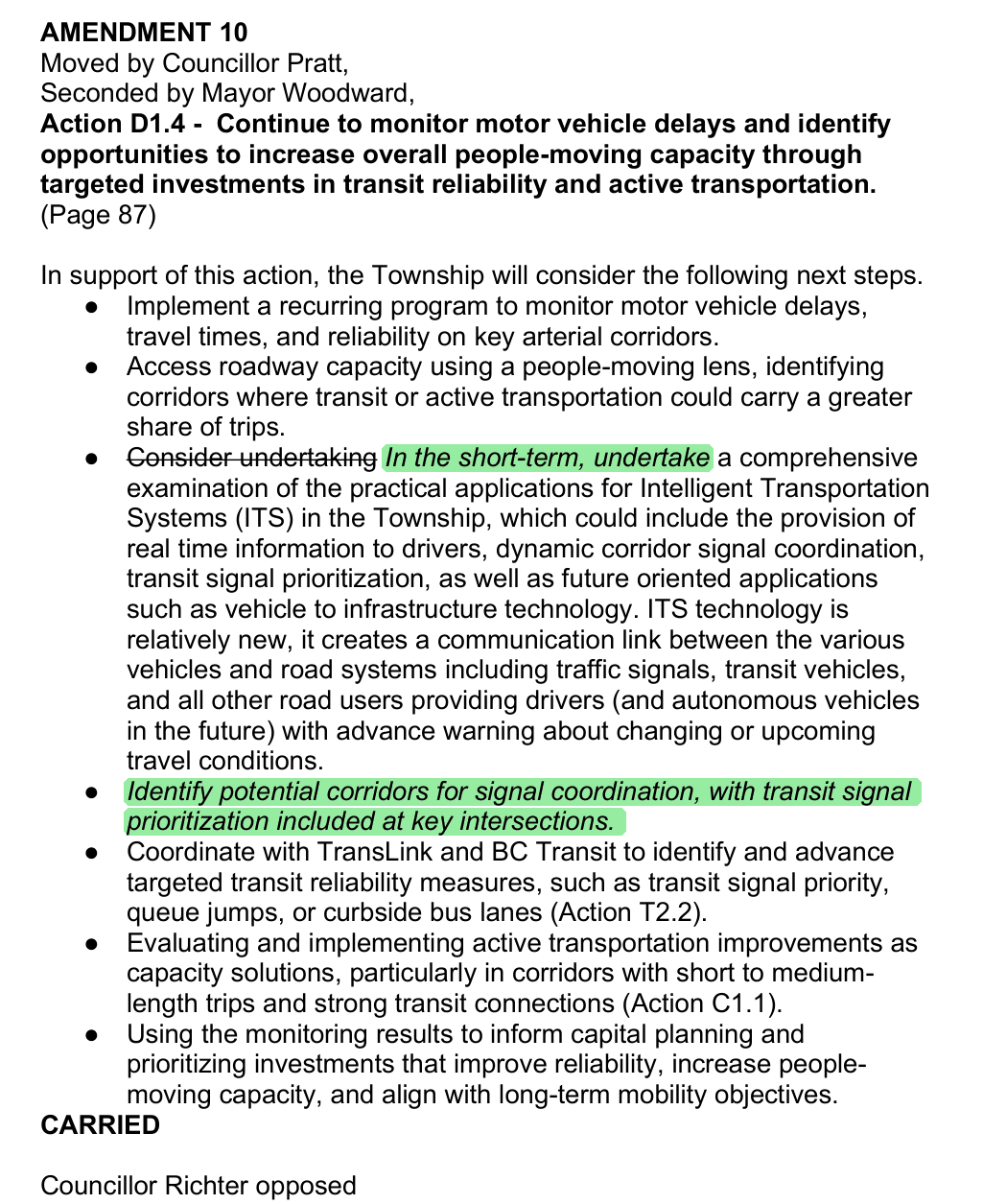
Smart signals, short term
A look at smart signals went from "consider" to the short term, with corridors to be picked for signal coordination and transit signal priority, so more people move through the lanes we already have.
 From our analysis
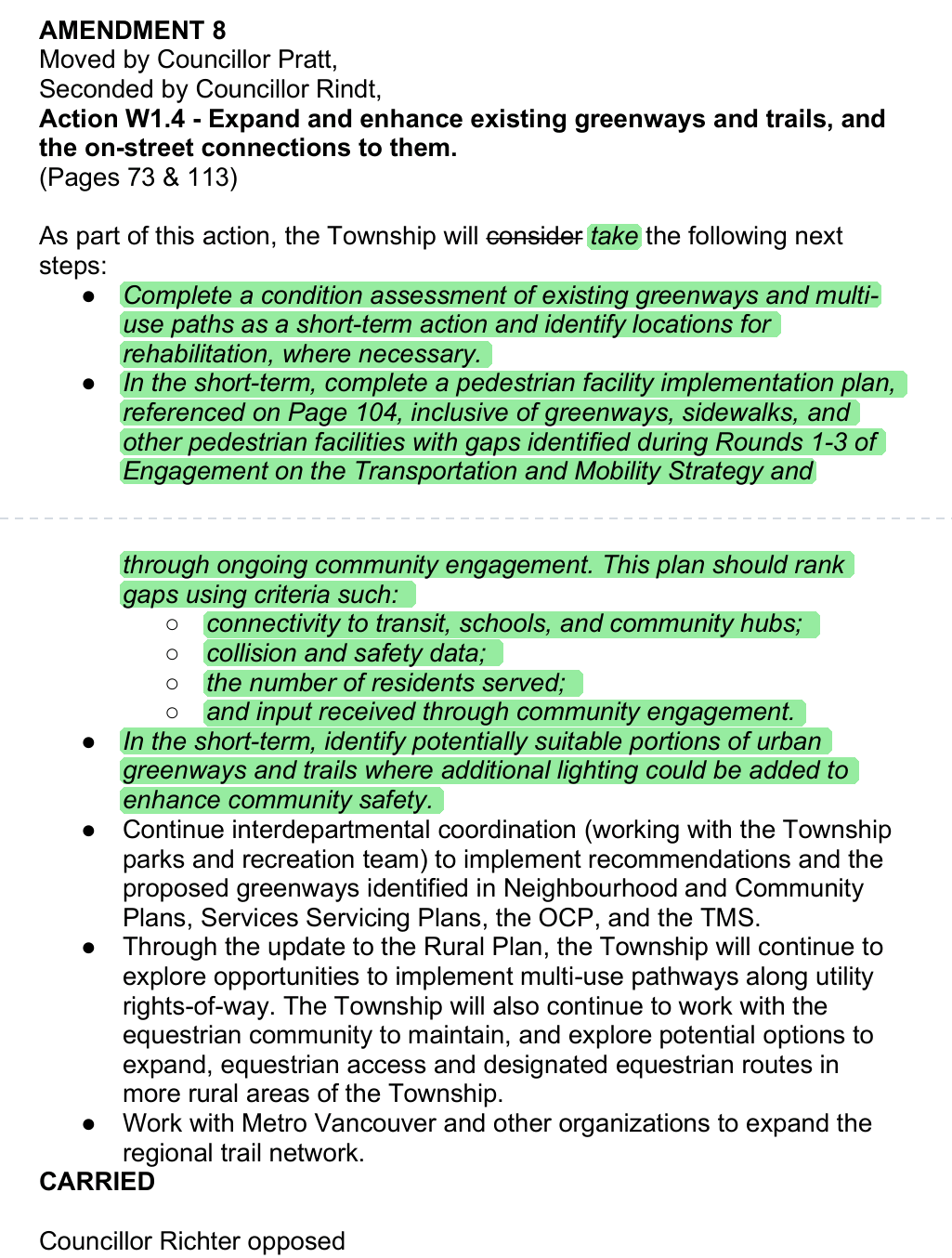
Fix the greenways we have
A condition check of existing greenways and paths, a ranked plan for filling gaps using what residents told the Township in engagement, and finding urban trails that need lighting are now short-term actions.
 From our analysis
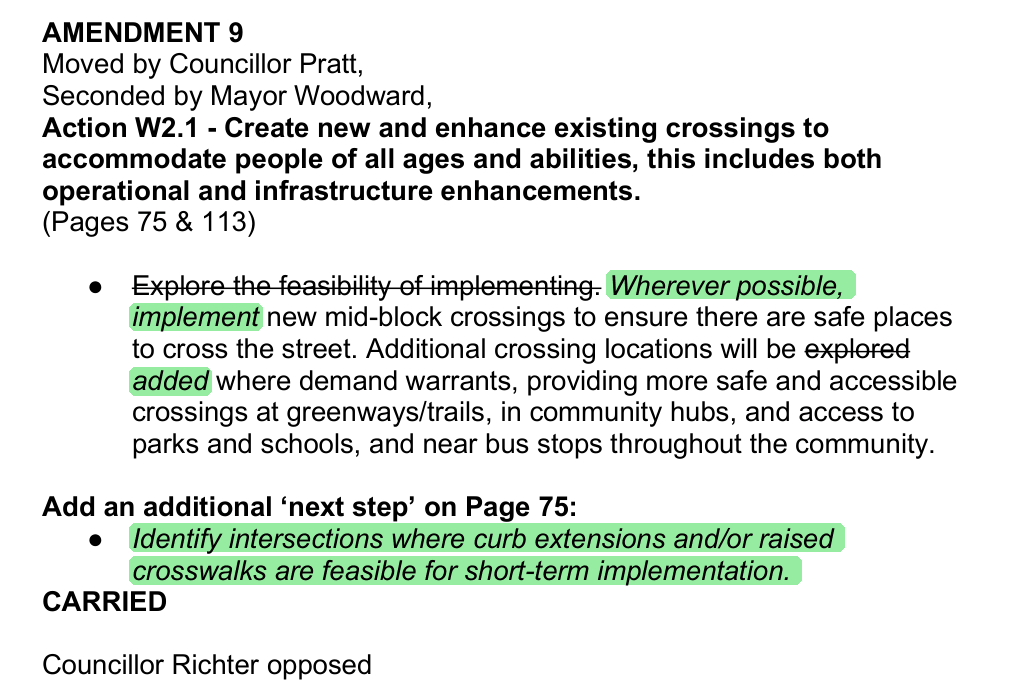
More mid-block crossings
Mid-block crossings went from "explore the feasibility" to "wherever possible, implement", and finding spots for curb extensions and raised crosswalks, the same raised crossings the slip lane report ruled out, is now a short-term step.
 From HUB Cycling Langley
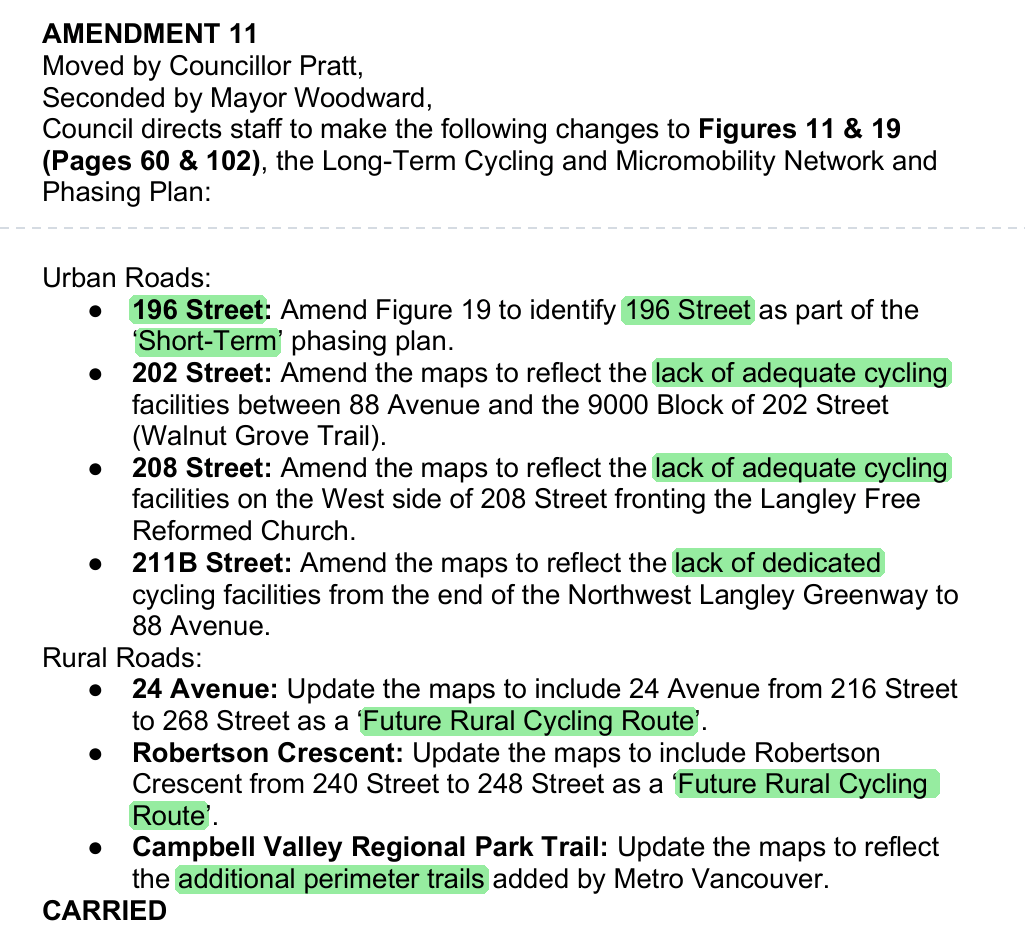
Corrected maps, faster connections
Bike routes that were drawn but don't exist are now shown as gaps, 196 Street moved up to the short term to reach Willowbrook SkyTrain, and 2 rural routes were added. Council also dropped cycle tracks, set up a funding program to upgrade routes that fall short of current guidelines, and had each phase list the kilometres to be built.
The Mayor added a 13th amendment so the final strategy would come back "for council consideration" rather than "for adoption", which left room to push for more.
These asks didn't make it into the strategy.
 From our analysis
Bus lanes on 208 Street
"…formally designate 208 Street as a future transit priority corridor, with a commitment to implementing dedicated bus lanes on the six-lane cross sections"
The strategy lists 208 Street for better north-south service, and Council added a step to find intersections for TransLink's transit priority treatments, but there are still no bus lanes on 208 Street.
 From us and HUB
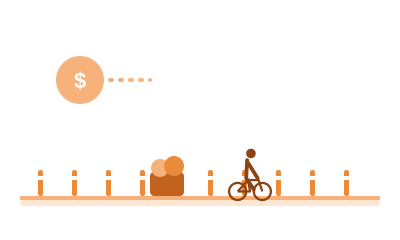
A quick-build program with its own budget
"…establish a dedicated annual quick-build program with a minimum budget of $1-2 million per year, beginning in 2027"
The final strategy still says the Township "may consider" quick-build.
 From our analysis
Fewer studies before building
"…remove "study" as a prerequisite and reclassify the action to allow implementation to begin immediately"
A few actions moved straight to the short term, but much of the plan still needs a study before anything gets built.
 From HUB Cycling Langley
Safe cycling routes to every school
HUB asked for at least 4 safe cycling routes to every school, 2 north-south and 2 east-west within 5 km, first in line for quick-build. It isn't in the strategy yet.
 From HUB Cycling Langley
A realistic price for maze gate removal
HUB pointed out that the Township's price per gate is much higher than Coquitlam's, which removed some for as little as $500 each. It's on the record but not in the strategy, so our maze gates campaign continues.
On July 13 Council sent the strategy back to staff to fix how its maps show future SkyTrain stations, and on July 27 it deferred the vote to the new Council's November 16 meeting. Staff estimate it needs 36,650 hours of work to set up and 34,925 hours a year after that, and say most of it can't happen without more staff or consultants, so adopting it is only the first step.
1. Endorse the strategy on November 16
With all 13 March amendments in it, as written.
2. Fund it in the 2027 budget
The staff time to get started, plus a quick-build program with its own yearly budget.
3. Name 208 Street for transit priority
Mark the bus lanes on the six-lane section while the road is still new.
4. Bring back the 88 Avenue slip lanes
The 88 Avenue and 208 Street options were put on hold to wait for this strategy.
Take action
Write to Mayor and Council
Email mayorcouncil@tol.ca before November 16, tell them which of these changes matters most to you, and ask them to endorse the strategy and fund it.
Ask your councillors
"Will you vote to endorse the Transportation and Mobility Strategy on November 16, and fund it in the 2027 budget?"
Read the strategy
The Township's project page has the drafts and what each round of engagement heard.
Stay updated
- September 2023The Township starts work on the strategy with a consulting team.
- October 6, 2025Council asks to see the draft before any more public consultation.
- February 20, 2026The 250-page draft comes out in the February 23 agenda.
- February 23, 2026Council holds it for two weeks, 5 to 4, with Councillors Kunst, Martens, Richter and Whitmarsh opposed.
- March 9, 2026All 12 of Councillor Pratt's amendments pass, plus the Mayor's, and the draft goes out for a final round of engagement. Read our post.
- April 14 to May 11, 2026Round 4 engagement, with 25 people at the online open house and 77 survey responses.
- July 13, 2026Council sends the strategy back to staff to fix how its maps show SkyTrain stations, with Councillor Richter opposed.
- July 27, 2026Council defers it to the new Council's November 16 meeting, with Councillor Richter opposed.
- Next: November 16, 2026The new Council considers the strategy.
How each amendment was voted
Every amendment carried. Councillor Richter voted against amendments 1 (slow streets), 8 (greenways), 9 (crossings) and 10 (smart signals), and Councillors Martens and Whitmarsh voted against amendment 2 (roundabouts). The main motion, as amended, carried with no one opposed.
The full text of all 13 amendments is in the March 9, 2026 minutes, which start on page B.1-1 of the March 23 agenda package (37 MB).
Sources
- Transportation and Mobility StrategyTownship of Langley project page, with the draft and engagement reports
- Report 26-87, Transportation and Mobility StrategyTownship Engineering, July 13, 2026, item E.2 of the July 27 agenda package (200 MB), with the final strategy as Attachment A
- Analysis: Transportation and Mobility Strategy (Feb 2026 Draft)Strong Towns Langley
- Significant Wins for the Transportation and Mobility StrategyStrong Towns Langley, March 10, 2026
- Council meeting summariesFebruary 23, March 9, July 13 and July 27, 2026, with minutes and video
- A comparison of traffic flow performance of roundabouts and signalized intersectionsDemir and Demir, The Open Transportation Journal, 2020